 (469) 751-4018

-
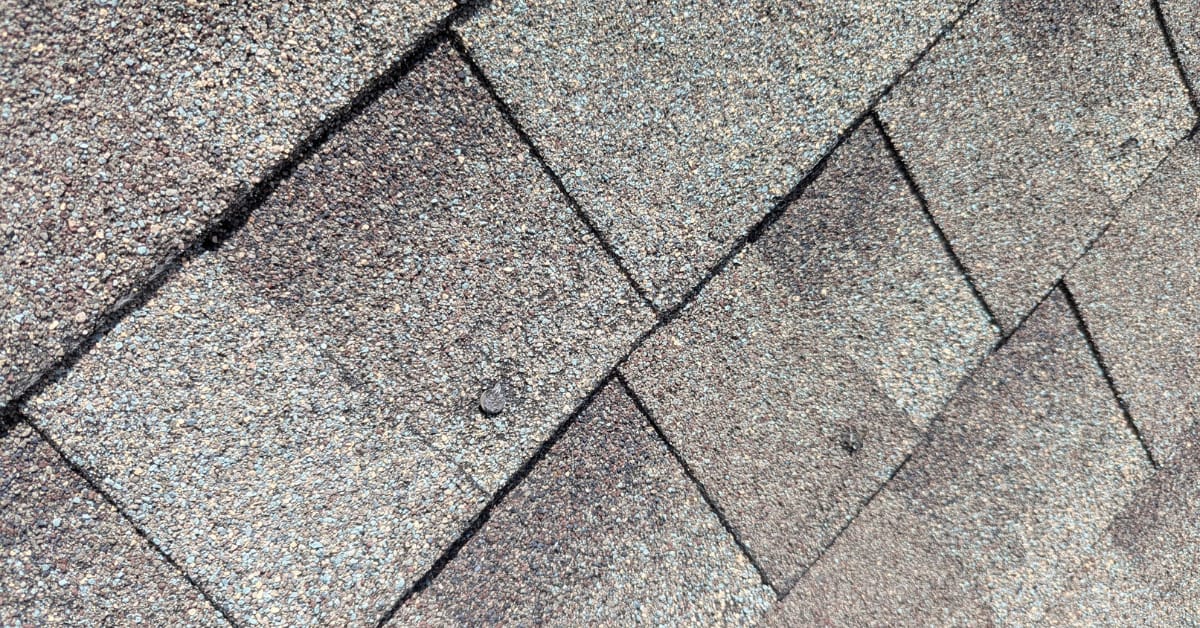
Asphalt granules protect shingles from sun, rain, and hail. So, when they shed prematurely, your roof is left vulnerable to the elements.
-
Texas heat, UV exposure, and hail are the biggest drivers of premature granule loss, since they all stress the shingle, shedding the protective layer.
-
Early inspection helps determine whether a repair or full replacement is needed before bigger problems, like leaks, form.
Small piles of dark, sand-like grit in your gutters or around your downspouts may be a sign that your asphalt shingles are losing their protective layer. These are granules from the surface of the shingles: the part that shields shingles from sunlight and rain. Of course, some granule loss is expected. Even a new roof will shed a small amount during its first year, while older shingles will shed granules gradually as they age.
But if your asphalt shingle roof quickly turns patchy, gets “bald spots,” or deposits of granules are found around your home, then it’s time to act. You don’t want to face the next big Texas weather event, even with a roof that can no longer protect your home. Here’s what Texas homeowners need to know about granule loss.
What Causes Granule Loss on Asphalt Roofs?
Granules are often made of crushed stone or ceramic-coated minerals to add more protection to the underlying shingle. (You can read our asphalt shingles post to learn more). Again, some granule loss should be expected with basic wear and tear. As shingles age, the asphalt that holds the granules in place begins to dry and harden. Once that bond weakens, heat and rain will begin washing the surface away.
But premature granule loss is a bigger concern. Hail impacts and strong wind gusts are common culprits for this in Texas. Hail dents, penetrates, or otherwise knocks free granules. The impacts may also bruise the asphalt layer below, creating a dark or bare spot that will be visible to the trained eye after a storm. Even if your roof isn’t leaking right after this damage, the shingles have still lost their protective layer and will deteriorate faster.
Water is another big culprit. Texas’ heavy rainstorms can be hard on asphalt roofs, and poor drainage can compound the problem. When water pools in roof valleys or due to clogged gutters, it will quickly find or create leak points, causing or taking advantage of premature granule erosion.
Big Signs of Granule Loss
After a heavy rain, finding a small handful of granules in the gutter isn’t anything to worry about. But if you’re finding thick layers of grit after every storm, something may be afoot. Walk around the perimeter of your home and study your roof’s surface. Look for “bald” patches or shiny areas where the black asphalt base is visible. Those are the spots where the granule layer is gone.
Once you notice these signs, it’s time to call a roofer to take a closer look. They will be able to tell you if the granule loss is something to worry about, if it’s just typical wear and tear or damage that needs to be fixed. If the roof is in otherwise good shape, replacing a few bald shingles may be enough. But if the wear is widespread, the roof is already old, or deeper damage has occurred, then a replacement may be the better long-term fix.
To that end, you can consult our guide to choosing the right roof in Texas. Replacing your roof gives you the opportunity to buy shingles rated to withstand heavy winds, hailstorms, and rain. You can also ask about your drainage system to make sure your roof efficiently sheds water, avoiding pooling. Maintaining proper attic ventilation will also slow the rate of wear by reducing the heat radiating into the shingles, which may otherwise cause blistering.
We’re Here to Help
Need an expert opinion? Don’t hesitate to contact the DFW Roofer team with your questions. Call us at (469) 751-4018 or schedule an appointment through our online appointment form.