 (469) 751-4018

-
Trim, gutters, fascia, and small exterior accents change how a roof looks just as much as the shingles do.
-
These auxiliary components frame the roofline and the transition between the roof, the siding, and any brick or stone.
-
When they work together, the home looks coordinated. When they don’t, the roof can look out of place even if the color is right.
We’ve already written about choosing the right roof color and siding color to boost curb appeal. But there’s more to a great-looking roof than just these two elements. The trim around the edges, the fascia boards underneath, and the gutters that trace the outline of the roof all contribute to the overall look as well. Even shutters, porch columns, and front-door colors can change the balance of warm and cool tones across the exterior. Let’s take a closer look at how these elements contribute to the holistic appearance of your home.
Matching Trim, Fascia, and Soffits to Your Roof
For an explainer of each part of the roofing system, you can see our anatomy of a roof guide. We’ll begin with the trim, which creates the edge that separates the roof from the rest of the home. A lighter trim color will create a more pronounced and clean line, which can look sharp and modern. A trim that’s closer to the color of your roof will soften that line, which can bring emphasis to the roof or the home’s exterior, depending on which is bolder. The right choice depends on which part of the exterior you want the eye to land on first.
Fascia boards sit directly below the shingles, so they’re often the most noticeable part of the trim system. If the fascia matches the roof, the upper portion of the house tends to look more “settled” and grounded. If it matches the siding, the transition to the roof will feel smoother, and the roofline will look lighter. Many homes in Texas take that second approach because it keeps the top of the house from feeling too heavy, especially on single-story or low-pitch roofs.
Then there are the soffits. Soffits are the part that sits in the shaded areas. Dark soffits can make eaves look deeper, exaggerating the overhang of the roof, while lighter soffits tend to brighten the underside of the eaves and tie the trim together. All of these elements are part of one aesthetic system, so they should feel cohesive and complement the roof and siding.
Choosing Gutters and Downspouts for Your Roof
Gutters follow the exact line of the roof, so their color will have a lot of visual impact. Darker gutters tend to create a sense of thickness along the edge of the roof, while lighter gutters tend to blend more easily into the siding or brick, keeping the edge from drawing too much attention.
Typically, homeowners try to match the gutters to the fascia, and the fascia to the siding. This will keep a consistent appearance across the entire upper wall. But you might also match the fascia to the roof, which would continue the color down the gutter line and keep the roofline intact. Either option works as long as you keep the transition complementary to your home’s aesthetic.
Since downspouts run down the wall, homeowners typically want to hide them as much as possible. Predictably, this is best done by matching the downspouts to the siding to make sure they blend together. For instance, on many brick homes in Texas, a mid-tone brown or tan downspout will blend better than white because it sits closer to the natural tone of the brick.
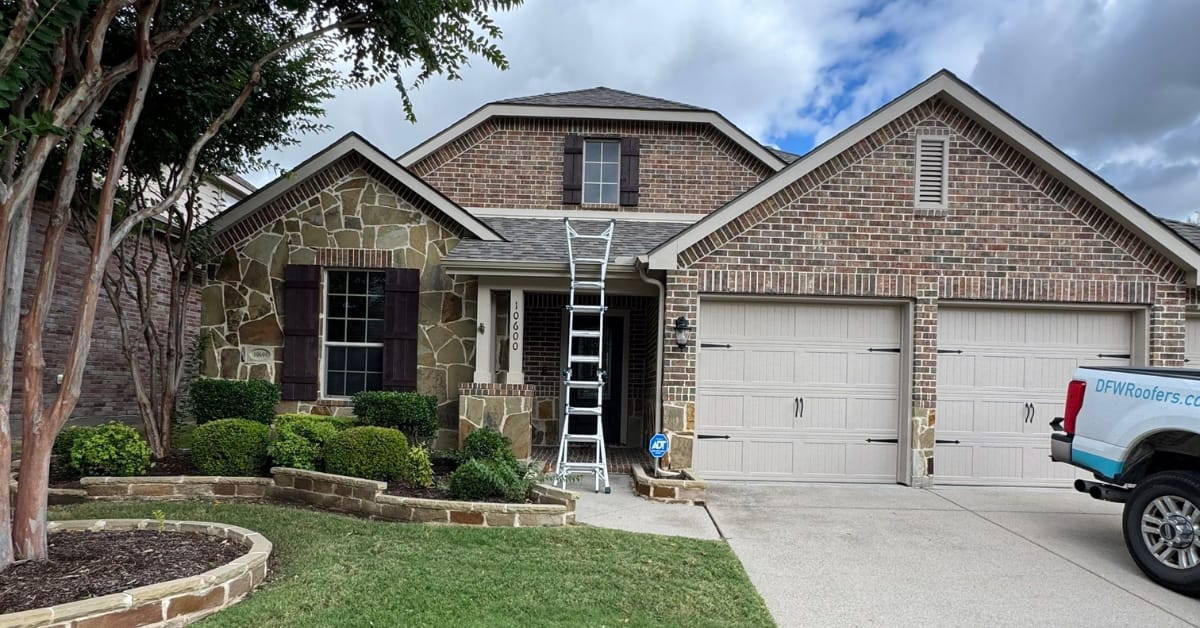
A couple of other accents are worth mentioning, too. Shutters, porch columns, window trim, and the front door all interact with the roof’s color family, so apply the same principles to these elements. For instance, dark shutters can reinforce the tone of a dark roof, while lighter shutters soften the look of homes with light siding or stone.
The same applies to your front door. It probably shouldn’t introduce a completely new color family (a cool-gray roof tends to match a cool-toned door). But more complex creative options are always possible. Just get a professional’s opinion.
We’re Here to Help
Need more information about choosing the right roof or siding? If you have any questions or need assistance with damage, contact DFW Roofers at (469) 751-4018 or schedule an appointment through our online appointment form.